

Medications for opioid use disorder (MOUD) can help people recover.
Opioid use disorder treatment has changed. MOUD, or medications for opioid use disorder, are highly effective, and they improve the chances of a safe and successful recovery. Medications are now available in many different forms and types to meet the needs of individuals. For people who are ready, medication-based opioid treatment can offer a path to healing — especially as part of whole-person care.
If I could do it, anybody could do it.
What we can do
MOUD can reduce withdrawal symptoms and cravings.
Discover different types of MOUD available that can lower the risk of overdose.
Find treatment that weaves clinical and traditional care practices into a community setting.
Do you know someone who needs treatment or recovery support?
Medication provides stability and the chance to recover.
What is MOUD? It stands for medications for opioid use disorder, which help many people as part of opioid use disorder treatment, including those who are struggling with fentanyl use. Methadone and buprenorphine are the most effective MOUD available and are proven to help reduce overdose death risk by 50%.
MOUD works to normalize your brain chemistry to lessen or prevent opioid and fentanyl withdrawal symptoms and relieve cravings. Medications include methadone, buprenorphine, and naltrexone.
MOUD provides stability and safety and can make it possible for people to work on healing trauma, repairing relationships, building resilience, and learning new ways of coping. It can be an important part of whole-person care.
MOUD is medication that provides stability and safety and helps to normalize your life. Medication can prevent fentanyl withdrawal and reduce cravings. This makes it possible to work on healing trauma, repairing relationships, building resilience, and learning new ways of coping.
- MOUD reduces the number of deaths from overdose.
- It can reduce chronic pain, cravings, and the risk of resuming drug use.
- It has been shown to reduce the transmission rates of HIV and hepatitis C.
- Medication taken under a health care provider’s supervision is safer than opioids made in illegal labs.
- Health care providers can help each person find the right medication and dose.
Getting treatment now is one of the best things you can do for your baby and yourself.
- Continued opioid use during pregnancy can lead to complications for the parent and baby. That includes neonatal abstinence syndrome, or NAS, for the newborn.
- Methadone, buprenorphine, and naltrexone are safe during pregnancy and chestfeeding. These medications also reduce the risk of preterm and low-birthweight births and miscarriage.
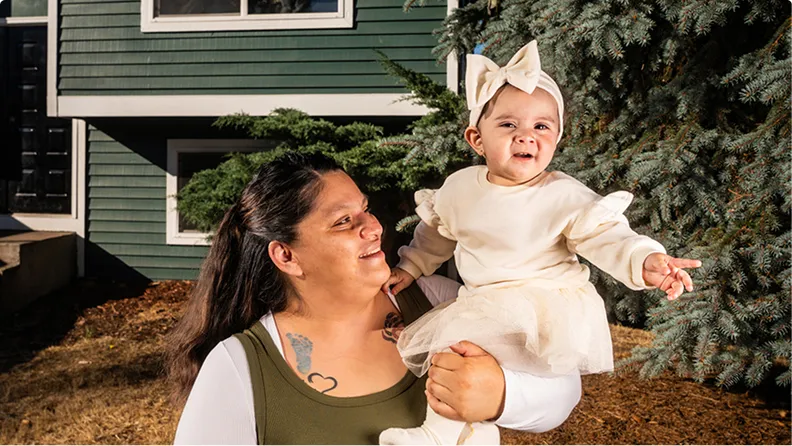
After many tries, Alicia Oliver found a treatment that worked.
Alicia Oliver, a member of the Muckleshoot Indian Tribe, started treatment for opioid use disorder for the 19th time in 2022. On the 19th time, she tried a buprenorphine treatment. That time, it stuck.
Two big factors are shaping her long-term recovery. She wants to protect her children and keep living their busy days filled with soccer, hip-hop, and tumbling classes. And she found medication that works for her. Buprenorphine, also known as Suboxone, is one of several MOUD options.
Before, like many people, Alicia believed taking a daily medication for opioid use disorder meant you weren’t really in recovery. After seeing how effective the medications have been for her and her family, her views have changed. She learned how opioid use disorder affects the brain, and that it’s not a character flaw:
It's important to know and understand that addiction is a disease, because you're probably wondering, ‘Why can't they just stop?’ Unless you know what goes on, you really can't understand how hard it is.
Every person’s treatment journey will look different.
Medication options for opioid use disorder include methadone, buprenorphine (such as Suboxone), and naltrexone (also known as Vivitrol). People work with health care providers to find the medication and dose that work well for them. Depending on the medication, it’s available:
On different schedules. Some can be taken monthly.
In different forms, such as injectable or oral.
Signs of opioid use disorder
Signs of opioid use disorder include strong cravings, difficulty not using when you want to stop, and withdrawal symptoms. People impacted by substance use often use even when it’s harming their relationships, health, or daily life.
Opioid use disorder affects the brain and makes it extremely difficult to stop on your own. That is why MOUD and other recovery and harm reduction supports exist.
Opioid and fentanyl withdrawal symptoms
Opioid and fentanyl withdrawal symptoms include anxiety, muscle pain, sweating, nausea, and intense cravings. They usually start about 12 to 24 hours after the person last used. How long they last depends on the person. MOUD can prevent or reduce withdrawal symptoms.
- Methadone relieves withdrawal symptoms and eases cravings for people who stop using fentanyl. When dosed properly, the medication stimulates the same receptors in the brain as fentanyl without creating the high. That lets people start treatment without going through detox.
- Methadone is effective for people who suffer from severe and chronic pain.
- Methadone is dispensed by specially regulated clinics, called Opioid Treatment Programs. It can be taken orally as a liquid or pill. Dosing from an opioid treatment program can start at up to six days a week but usually becomes less frequent. Some patients eventually can get up to 28 days of take-home doses.
Some people prefer buprenorphine, often called by the brand name Suboxone, because you can get a prescription filled at a pharmacy. This can be easier if you live far from your doctor or travel often.
- People can start taking buprenorphine in the early stages of withdrawal, after abstaining from using opioids for at least 12 to 24 hours.
- Buprenorphine blocks the effects of other opioids, in addition to fentanyl.
- It can be offered in most medical settings.
- It comes as a pill, a film under the tongue, a six-month implant, or a monthly injectable.
Some people prefer naltrexone because it works for both opioids and alcohol.
- People can start taking buprenorphine in the early stages of withdrawal, after abstaining from using opioids for at least 12 to 24 hours.
- It also blocks the effects of other opioid drugs.
- It can be offered in most medical settings.
- It comes as a daily pill or monthly injection.

Treatment made for Native people saves Native lives.
If you or someone in your life is ready for treatment, look for a program that blends clinical and traditional health care practices in a community-based setting.
Although MOUD alone is appropriate and effective, treatment can work best when it combines medication with mental, emotional, spiritual, and cultural support.
Explore the Washington Tribal Opioid Resource Exchange.
Contact your Tribe’s or community’s behavioral health or medical center.
Call the 24-hour Washington Recovery Help Line at (866) 789-1511.
Use the Washington Recovery Help Line MOUD locator to find a methadone, buprenorphine, or naltrexone provider near you.
Learn about different Opioid Treatment Programs.
Call or text the WA Telebuprenorphine Hotline at (206) 289-0287. Call or text 9 a.m. to 9 p.m. daily.
Call the Native Resource Hub at (866) 491-1683.
Call 988 and press 4 to reach the Native and Strong Lifeline.
When people might need opioid treatment, we can help.
Ken Choke’s Elders taught him to take care of family and community. Taking care of someone who uses fentanyl might mean showing empathy when you’re angry or being patient when you’re frustrated. And when they are ready to start treatment, helping them find a treatment program that works for them.
Ken, a leader with the Nisqually Indian Tribe, says:
Treat them as a human being, and don’t judge them.

Start talking by listening.
If you’re worried about someone and think they need treatment for their substance use, you might want to tell them what to do. Instead, hear them out.
Ask about their support network, their thoughts about overdose risk, what they might need to consider treatment, what they might need during recovery, their worries about other people.
How you listen and respond to your relative or friend builds trust. It could help them open up to you later or ask for your support when they’re ready.
By talking about steps they’re already taking to protect themselves and be healthy, you can affirm and encourage their effort and success.
MOUD are available on different schedules and in different forms. Taking prescribed medication is different from using illegally made opioids.

